A strategy to maximise the business value from digital
The British Standards Institution (BSI) is a leading standards organisation and provider of knowledge solutions, training, assurance, certification and professional services. In recent years, BSI had invested in technology and data foundations but it believed that further digital innovation could generate additional value. The organisation partnered with Berkeley to co-develop its digital strategy.
In conversation with BSI: transformational digital strategy
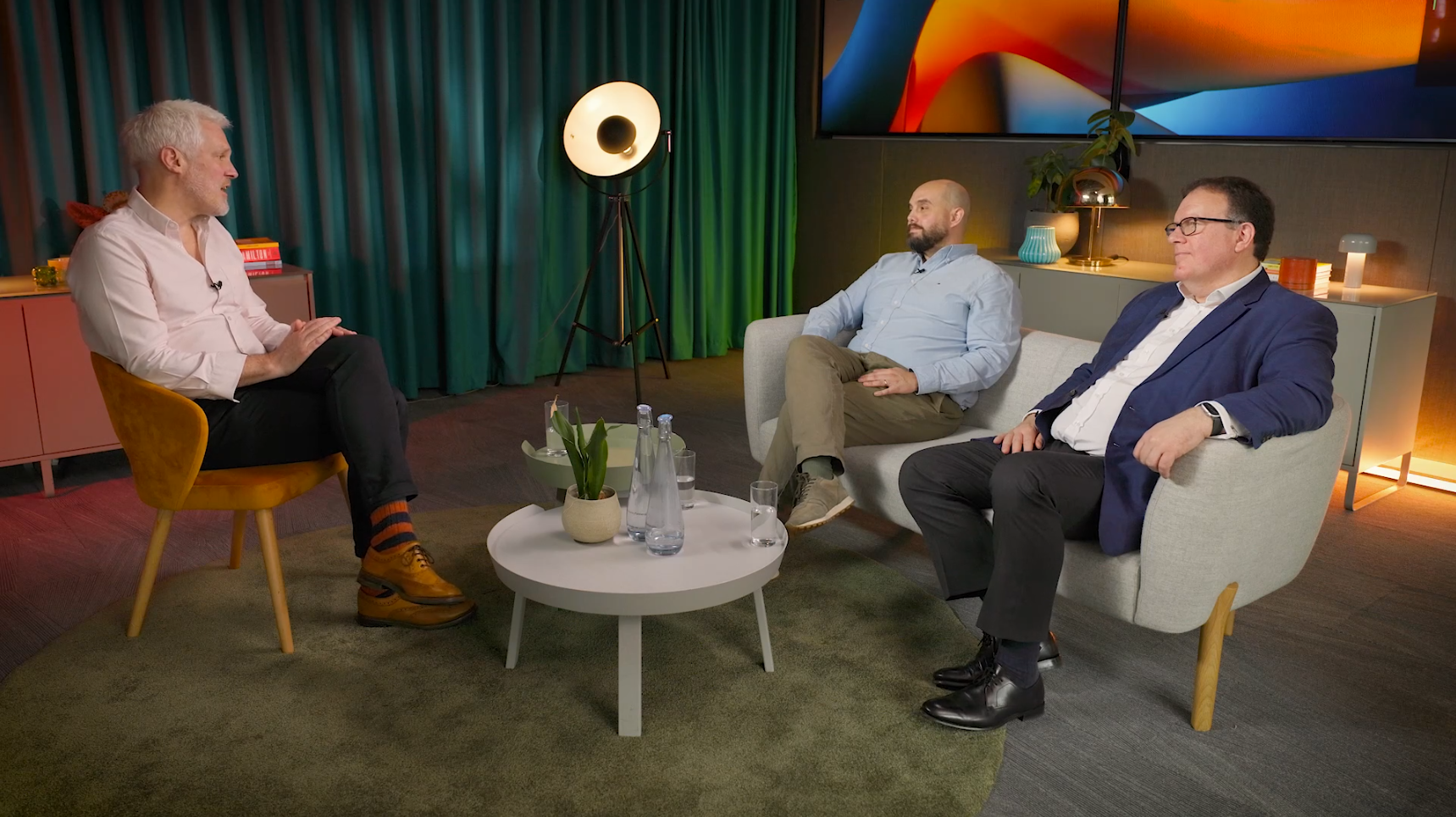

1. Why digital? Why now?
Tom: So I'm absolutely delighted to welcome Mark and Jonathan from BSI to be here today. And we're going to have a conversation around the digital strategy work we did together.
Mark: Great to see you, Tom.
Jonathan: Thanks a lot for inviting us.
Tom: So Jonathan, BSI obviously a very long standing established organisation, 125 years of experience in setting standards and certifying against standards. Why is digital so important for BSI?
Jonathan: Yeah, it's a disturbingly good question. So we recognise that the world is more digital, expectations of what standards should be and how you should assess against them have changed. And we needed to move with that and provide a much more relevant, valuable, impactful service for our clients. And that's really what our digital strategy was about.
Mark: So if you look at, for example, how do we set standards and govern AI, that's a very different world to how do you set standards, govern lift, for example, just in terms of the, the speed at which the market's developing, the potential risks to human beings, but also just the fact that by its very nature, AI is continuously evolving. So how do you how do you make sure that you've got the guardrails in place to make sure that things like AI is trustworthy and ethical and predictable?
Tom: So we're really talking about moving from a sort of more static traditional world of sort of analogue standard setting and certification to something that's much more dynamic and, and iterative and, and working with your clients to have almost a sort of always on setup.
Tom: Berkeley worked with BSI on development of your digital strategy. What was the what was the start point for that work?
Mark: So one of the main tenets of our overall strategy was that we knew we needed to become deeply digital and that was one of the sort of the core guiding principles. We obviously needed to know in detail what that looked like and how we're going to go about that. So this was very much a continuation of that work that come before. Also, it wasn't that we were starting completely from scratch. There was lots of great thinking across BSI into how we could do this. There's a need to bring it together into a cohesive overarching strategy. So that was the landscape in which we were we were operating.
2. Working with a partner
Tom: And what were you looking for in a, in a partner organisation?
Jonathan: I mean, I think when you're doing this stuff for work that is truly transformational. We knew from the outset that that digital technologies were going to change on business model. I mean, everything about our organisation. We don't want someone that's going to come in and do that to us. Tell us the answer and leave. We don't even want someone that's going to do it for us. And, and, and sort of we outsourced all the thinking and work. We needed a partner. We needed someone that would bring a level of expertise, bring that objective challenge, bring experience of, of navigating these sort of difficult conversations that we know we're going to need to have as we make choices about where we want to go and where we don't. And, and help us make great decisions. Not a decision that was sort of by committee because that leads to a mediocre strategy. So that's what we were looking for in a partner. And, and, and that's why we chose Berkeley.
Mark: Yeah, very much the Berkeley partnership were very respectful to our our understanding of the business and the ecosystem and and our own sort of what we bought to the table and yet bought in the skill set to help help sort of round out our team. So both in terms of being an extension to us, but also challenge. And it wasn't a relationship of sort of thing, a yes person. It was very much a trusted friend of if we were going down an unhelpful path, Berkeley would help sort of appropriately bring us back and sort of challenge that, challenge our thinking in that way.
Tom: That's fantastic to hear what you know, we're very thoughtful about the role that we play at Berkeley in strategy development. And I think the the way you both described it really resonates because what we want to do is absolutely work with you in co-development of strategy, harnessing the insight that exists within the organisation. And in BSI's case, there was a huge amount of insight actually right across the organisation around around digital. And so it really feels like we're working with you to develop a strategy that you then own, but that we're also, as you said, able to kind of come in and bring that right level of external challenge so that we're together creating something that's sort of very rigorous and sort of self challenge that makes sense.
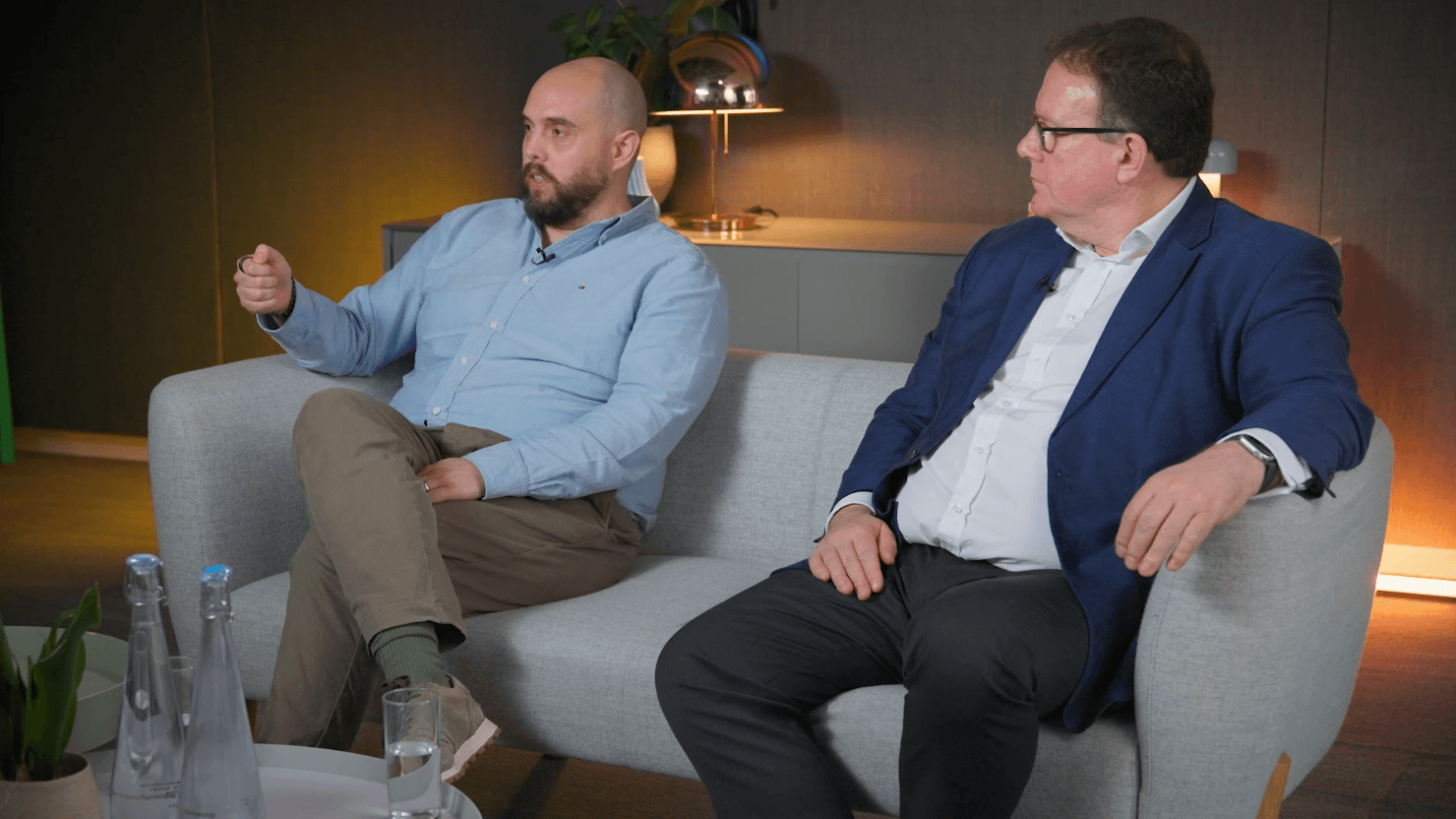
3. Flexing the approach
Jonathan: You need that flexibility. So you you brought frameworks that were proven that would develop a language if you like to discuss the difficult issues and you need a framework that will get you the result you want without being a slave to it. And I think that was really appreciated because frequently, you know, we, we would need to go round certain conversations again, because we weren't quite there or we needed to maybe do things in a slightly different order because of the experience of the team. And that flexibility was really, really important, but gave us that North star to say we do know where we're going and we're able to manage our stakeholders, if you like, which was, you know, the Exco, the board, the senior leadership team, all of our colleagues. So this is where we're going. This is how we're going to get there to give people the confidence that we're going to get there. But we're doing things in the right order. And I think that was really, really helpful.
Tom: Lots of organisations say they're unique and it's true to varying degrees, but BSI is quite a unique organisation in terms of its composition, in terms of its mission, in terms of the, I would say the calibre of people that work in the organisation and are able to bring insight to bear in this topic area. So it always felt to me like something we were going to have to really think through together and adapt in terms of how we were going to approach the work and how we were going to get through it to a really high quality outcome.
Jonathan: Because we're accompanied by Royal Charter. We are, we have no shareholders. So we are full, we are for profit. We're not a charity, but we have to distribute internally that profit and we we therefore have to reinvest in our purpose. So we're all about impact. So the the board quizzes as much about impact as they do about profit. That can be very difficult to get your head round because we don't have shareholder value as the sort of #1 measure. We have shareholder value and impact as equal measures. That can be difficult and a lot of frameworks can't take account of that. And I think that that was a good example where there was that flexibility to realise what we're trying to do and what success looks like for us as an organisation is slightly different for many other organisations.
Tom: I would like to think that when we approach these kinds of pieces of work that do have some, some real nuance and some real, you know, critical thinking that needs to go into approach that what we're able to do is rather than bring a cookie cutter sort of methodology, what we bring is, tools, we bring templates, but we also critically bring experience. And so we're therefore able to kind of flex to the situation and, and, and, and, you know, keep the outcome in mind and work towards the outcome.

4. Building internal capability
Mark: Or with the team were clearly just very experienced people who bought different different things to the to the conversation. But they're by having people with that clout who'd done this before, seen it delivered. It just meant it was a very informed, informed conversation. And it also meant that. And again, it comes back to that flexibility, but the team flexed around our teams to identify and were genuinely interested in how what did our team need to develop when Berkeley left at the end of the project, our team were better equipped to take things forward. So really flexing around and really being inquisitive of where do you want to play in this process? What do you want to develop? How can we support you? rather than just seeing it as a right, come in, deliver a PowerPoint presentation and and then move on.
Tom: That's great to hear. Absolutely. I think, you know, developing the people that we work with on the client side and also like pulling the best out of them is really, really important to us in the work we do.
Jonathan: I think everyone always says, you know, we really need to make sure we build capability and that that's why you bring a partner in. Very rarely delivered unless the capability is doing amazing PowerPoint slides. And we're definitely better at that as well. But we actually now have people who are experienced in in real strategic thinking, in sort of following a strategy through from analysis to choices to portfolio design to implementation. And so we have genuinely built a capability and that is quite a rare thing to happen, which has been great. I really enjoyed that.
Mark: Can I ask out of interest, how did you find working with BSI from your side?
Tom: Fascinating and rewarding I would say. I think we always enjoyed working with BSI, think the culture is great. I think the people are very, very sort of high calibre so bring lots of ideas to the table. I think there was a humility, I think there was a willingness to engage in real partnership and doing the work we did. And so overall it was a, it was a very, very sort of positive experience. We had wide engagement. And also I think we really appreciated that you were very happy that we worked together right up through the organisation. And I think we appreciated that we we supported you in a sort of CEO level conversations, in board level conversations and that was sort of very rewarding to be able to have that overall co-ownership with you.
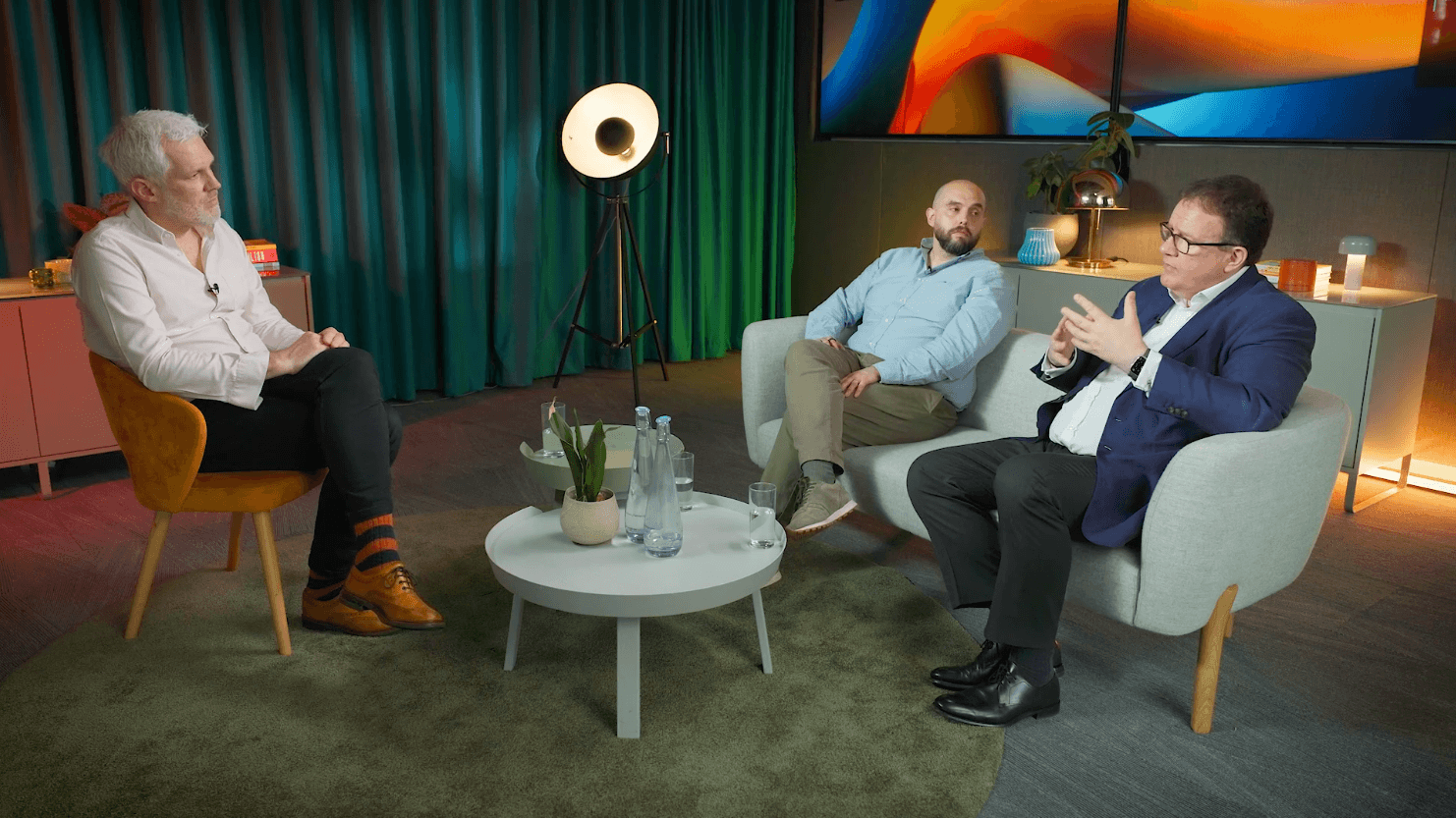
5. Establishing digital priorities
Tom: What key steps would you say you went through to get to those key digital priorities?
Mark: The first thing we did, and it was it was a way as a collective endeavour, it's really spend some time understanding what had been done so far. So not just sort of launching in and trying to rush to an answer, but really understanding what was there now and then understanding the wider landscape. So both looking outside, looking at what our colleagues were saying, what our clients were saying, we did a lot of client interviews to really understand the problem space properly before we started thinking about solutions. We then started to develop our thinking about where, were the opportunities to use digital solutions to overcome some of these problems. And Berkeley bought a really useful framework which helped us make sure we weren't just sort of, we didn't have confirmation bias if we, we knew what we were looking for going in. And therefore, that's what we found. It brought a framework that we could then look at the problem space from sort of different angles and that ended up with a long list that we could then start to shape into meaningful building blocks. So areas of the strategy that we could say, OK, these are cohesive and this will achieve a certain outcome. And there's a lot of respect from both, our internal team and Berkeley the wealth of thinking that existed within BSI. So it's very much a liken it to a, to a jigsaw where you're going around and gathering pieces up off the floor. And some of them are duplicative and some of them are missing. But, what we didn't have was that picture on the front of the box that let us say right here is here's where we're going. Everyone get behind it. And this process was great in that it was very respectful that the work had been done because it was all very solid, good thinking, but it just helped to bring that together so that people felt clarity on where we're going, but also ownership for it.
Jonathan: I think because the work was called digital strategy, it would have been really easy to see the word digital more than the word strategy to help get to the prioritisation was super important. Where while we were an integrated team, the Berkeley team had a different role, which was to challenge us to say you've, you've got to say no to something and how do you do that and what's the rationale for doing it. And, that deciding what not to do as well as deciding what to do is where having that, thought partner, that challenge became really, really important.
Mark: The ability to flex between being an integral part of the team, but then providing that sort of critical friend type role or providing some challenge and steer. I think it was testament to the integrity of the Berkeley team and the seniority of them that they were happy to. We didn't ever fall out, but there were a couple of conversations we didn't have that were quite sort of robust just because it wasn't just, "yes, Mark, I'll go and do that." It was a proper sort of relationship between equals where we had that challenging relationship, which was absolutely what I needed.
Jonathan: And it was safe enough to have those conversations. We knew that we respected each other, that everyone respected each other. I know that that should not, that should enable those tricky conversations. It shouldn't prevent them. And there wasn't certainly there was no sense of, you know, sometimes you do get advisors who will agree with you and say what they think you want to hear. We needed someone that would tell us what we need to hear in a way that felt safe and and productive and, and pragmatic. And I think that was critical.
Tom: So you build, you quickly try and build that sort of collaborative. Well, it's trust really building that trusting working relationship. And then within that working relationship, you can have honest, direct conversations. I absolutely recognise that. It begs the question, of course, what were the key priorities then that emerged from this, this process, Mark Jonathan,?
Mark: The three main sorts of groupings of of initiatives that we we came out with were firstly to delight our stakeholders and that meant really understanding them. So how do we bring the wealth of information we have about people we work with together to really Dr insights into how we can help them? The second thing was then how we enable our employees so we have some fantastically capable people working for BSI. We need to give them the tools they do so they can focus their time on the things that add the most value to stakeholders and our clients. And then the third of Jonathan touched on earlier is we are effective in information business. So whether it be bringing people together to write standards or verifying that someone's conforming to a particular way of working through to driving insights from all of the data that we're collecting from across ecosystems. We are about the flow of information. And therefore, our digital strategy has given us a huge opportunity to completely redesign and rethink about how we deliver the core services that we provide.
Tom: Yeah, that's exciting. I think that's a sort of fundamental reframing in the sense of the sort of the basis of the BSI business and offer. Yeah, that's really great to hear.
6. Gaining board buy-in
Tom: Jonathan, we just discussed the sort of level of engagement we had across the organisation and you did of course dedicate a full day with the board on this digital strategy. Can you just take me through your thinking on that and how that played out?
Jonathan: We've been talking about digital and not use the phrase deeply digital which we've used in our strategy and the board was rightly challenging. So you need to really, really, really describe what does that mean? Because everyone uses it. No one wants to be deeply analogue anymore. So deeply digital seems like a good idea. But what, what does that mean? To do that properly, we needed a day of their time. We're lucky that we had a board that was prepared to do that. So that's a good thing. But then we had to make sure that that was a day well spent and, and we wanted to make sure that we took them something that they could engage with that would show while working, but wasn't just a series of brilliant PowerPoint slides, although there were a lot of brilliant PowerPoint slides, but really took them through the arc of this is the external environment. These are the choices that we've made, these the investments we we will be asking for. This is why This is why you should believe we're going to do it so that that what we call the reasons to believe we're all there.
Mark: Yeah, I think the wealth of information we would be able to provide to them beforehand meant that whereas we did tended to go quite sort of evenly through the why, what and then move on to the how they they kind of got the why and to a degree that what very, very quickly and said, Yep, 100% behind it. We get what we need to do this and we're we're with you and that enabled us to move quite quickly onto the how and, and really look at next steps and how we're going to deliver it.
Tom: So that sounds like the Yeah, the thing that really finched it perhaps with the board was this. We're going to take you through quickly. We're going to recap the why, we're going to recap the what. But actually, let's really talk about how we are going to make this thing happen in a way that's real to you. And you can you can buy in.
7. Setting up delivery
Mark: We needed to consider sort of how we're going to execute the strategy from the outset, but at the same time, you don't want to be looking too far down the line when you need to be focused on the thing in front of you. So it was very much that balancing act, which we worked on together with Berkeley of yeah, lifting the head every now and again, saying like, how do we make sure that at the end of this we're left with something that we can quickly move on to deliver? And that really took a number of different forms. One was just the way we brought everyone along with us. So it would be, to be frank, much easier and much quicker to go into a small room with two or three people and write a strategy and and come out with it. But no one would agree with it. No one believed that it probably wouldn't be the right strategy.
Jonathan: But there were days.
Mark: But by doing that and engaging people, so there's probably around 50 people from across BSI who are, who are deeply involved, obviously being respectful of their time and making sure we are being appropriate with, with not deviating their their attention too much from, from their wider day job, but feeding into it. So that when we did move on to execution, everyone had a really clearview of what was needed and why we were doing it. The second thing is just having that, I guess just relentless sort of focus on leaving with a tangible outcome. So how did we develop things in a way that were deliverable and how did we consider carefully the sequencing of what we wanted to deliver so that we could quickly move on to what we know that these are the next three or four steps. We didn't have to sort of try and try and do everything at once because of the elephant, one bite at a time and leaving it with a really clear plan or right here are what we call the lighthouse projects. So the projects that would help really deliver capability fast and to just really start proving out that we could we could succeed in this. And there were reasons to believe in our ability to execute on the strategy and leaving so that it wasn't a sort of a blinking in the daylight when we came out of our board presentation saying, right, what do we do now? We had a clearview of how we needed to feed into the sort of the demand pipeline of our, our change processes.
Tom: And that that speaks to me of clarity around choices. It speaks to me of prioritisation. It speaks to me of sequencing proving sort of unlocking capacity as as you go. That's, that's the kind of space we're talking about, I suppose.
Jonathan: I think that the, the sequencing is key. I think there's always a temptation to look at priorities as, you know, whichever one has the pious MPV and you go with that and you know, and actually that isn't what drives it. What really drives it is whether you've got things done in the right order. So we'd have lots of things that, you know, theoretically were incredibly valuable, but we didn't have a platform to build it on or we hadn't built the capability, whether technologically or culturally, to make that happen. So what we realised and what made prioritization much easier was sequencing first and almost then realising that that made loads of the choices for you. You just there was an order
Tom: And we're talking about a five year plus journey that will evolve of course, going forward as well.
Jonathan: And, and quite often you, you know, with certainly I've seen this in many organisations that I've worked in where you create a strategy and we've said, well, we can't do any of that now. It's like, well, I know it's a strategy. You know, there is an order and we're going to get it done over five years, not five months. And, and that, that helped people calm down a little bit, but also recognise that you, you can't do everything all at once.
Mark: And I do think in coming up with that sequencing is it's more of an art than a science in many ways. If you do need to, yes, there are certain technical things if you have to do A before B, but then it's looking at the impact on people and how you can free up people's capacity, how you can make people's lives better, to get a sort of goodwill in a transformational change as we move forward. And, and then creating a bit of a narrative around it. So no one's going to get excited by a list of 50 projects that need delivering in the next 5 years. But if you can start to sort of bring a bit of a narrative and say that first of all, we're going to focus on making our frontline staff lives easier and better by doing this, this and this, We're then going to focus on our clients and really understanding them. And, and then we're going to move on to more transformational things. And you can start sort of thread and people can see that people can hold on to exactly.
8. Advice for others
Tom: Together we ran a strong process, we got to a strong outcome. What advice would you offer others who are going through a similar process or set of thinking?
Mark: It's very easy to sort of keep everyone happy and, and the tragedy ending up being all things to all people. I think it's that moment you've made the first decision of what you're not going to do. That was a sensible, viable option, but it's not the the best course for your particular challenge. I think that's, that's the key point of a strategy should be looking at what is the underlying problem you're trying to solve, what's your policy or approach to solving that strategy and a plan of action. And because of that, you can't solve everything at once. You need to be quite selective.
Tom: Avoid a avoid a beige strategy.
Mark: Exactly, Yeah.
Jonathan: And I think to quote my late grandfather "Its the sizing up of the job that takes the time", one of the things thats really important is decide to clarify what is the question you are trying to ask. For us it would have been very easy to say how do we digitise our business, that was the wrong question. The right question was what can we do as an organisation bearing in mind what digital technologies can do. So it was about strategy and transformation, it wasn't about digital. And so the first thing is get the question really, really, clear, and actually half of the answer comes simply from getting the question right, and then involve the right people and as many people as possible in answering that question. Because I think that is what leadership and strategy is all about, its about asking questions, and involving people in coming up with an answer that everyone is behind. If they understand the strategy, they're behind the strategy, there's a really good chance they'll then execute the strategy, which is which is why we're here.
Mark: Yeah, there's a really good point as well, particularly in the age of AI when there's people across the world having conversations. All right, how should I use AI? Which is a wrong way of looking at it. You shouldn't have a solution looking for a problem. So by sort of really clearly setting out that question to begin with, it make sure you don't fall into that trap, which for me digital is really sort of that is really a real risk that there are a lot of funky things you could do. But the question should be to what end? Why are you trying to use it?
Tom: How does it support our organisational vision and objectives? And to your point, Jonathan as well, this idea that always resonates with me, and I know we think of a Berkeley, which is, you know, fundamentally strategy setting is a a social process as much as it is an intellectual process. So that idea of really working across the organisation to get everybody on board and sort of pointing in the same direction is a very, very powerful thing
Jonathan: Yeah, because it's not about having a great strategy, it's about executing the strategy. And that is about people and it's about people's emotional response to a strategy. And so setting up the right environment, taking account of the needs and fears and culture of the organisation, that's actually what's going to make it successful, not whether it's right, whatever that means.
Mark: That's a really good point and quite early in the process. So we started the process in January last year. In April, we had a three hour session with about 180 odd leaders from across BSI in one of our big leadership conferences where we started to interrogate the early thing thinking. So rather than waiting until the end and going here's a strategy, we the leaders got a chance to actually engage in it and and feed in and a Berkeley were the key to supporting that process to enable us to have those conversation.
Tom: Yeah, it is, it is, you know, it really is that sort of iterative sense of strategy development, isn't it? And we we talked about the board. You know, there was a board iteration essentially as well. You know, you're really bringing everybody into the thinking and allowing the room for the the strategy to sort of breathe and evolve within the course of the work that we're doing. Jonathan and Mark, thank you so much for the time we've had together talking about digital strategy at BSI.
Jonathan: It's been great. Good conversation. Thank you.
Mark: Absolute pleasure. Thank you.
More about BSI and our digital strategy engagement
With a strong 125-year history in defining best practices, BSI now supports many thousands of businesses and other organisations in more than 180 countries.
The industries in which BSI operates are changing. Both traditional competitors and new market entrants are investing in digital to transform their value propositions. BSI needed to act to maintain its market position and meet increasing client expectations.
More fundamentally, BSI is in a position to influence the evolution of digital itself, both for clients and broader society. Building the public's ‘digital trust’ is a strategic priority for BSI, and the organisation had begun a number of initiatives at the divisional level. BSI recognised the opportunity to harness and build upon this existing thinking, bringing these activities together to forge a comprehensive, enterprise-wide approach.
A trusted digital consulting partner
Berkeley has enjoyed a long-standing relationship with BSI, which had previously seen our partnering together on engagements including programme leadership, divisional strategy, and setting up a new artificial intelligence (AI) business unit.
Against this backdrop, BSI asked for Berkeley’s help to answer two strategic questions relating to digital:
- How could digital technologies and mindsets improve BSI’s business and support the wider business strategy objectives?
- How can BSI positively impact the outside world’s use of digital solutions?
Over the course of six months, we partnered with BSI to co-develop these two distinct but interrelated digital strategies.
We knew from the outset that digital technologies were going to change our business model - everything about our organisation. We didn't want someone to come in and do that to us: tell us the answer and leave. We didn't even want someone that's going to do it for us, outsourcing all the thinking and work. We needed a partner. We needed someone that would bring a level of expertise, objective challenge, experience of navigating the difficult conversations that we knew we would need, and help us make great decisions. That's why we chose Berkeley.”
jonathan chocqueel-mangan, chief strategy & Transformation officer, BRITISH STANDARDS INSTITUTion
Developing an ambitious and actionable digital strategy
We began by forming a working group of around 40 key people from across the organisation, bringing these key people together for regular strategy development discussions. The process was inclusive, collaborative, and grounded in BSI operational realities. From experience, we knew that investing time and effort in this foundational work ensures the strategy is both visionary and achievable, and secures the necessary buy-in and ownership.
Given the breadth of opportunities that digital offers, the first step was to align on BSI’s definition of digital. We used the Berkeley digital framework to provide a broad definition of what digital could mean, before narrowing down to what it should mean for BSI.
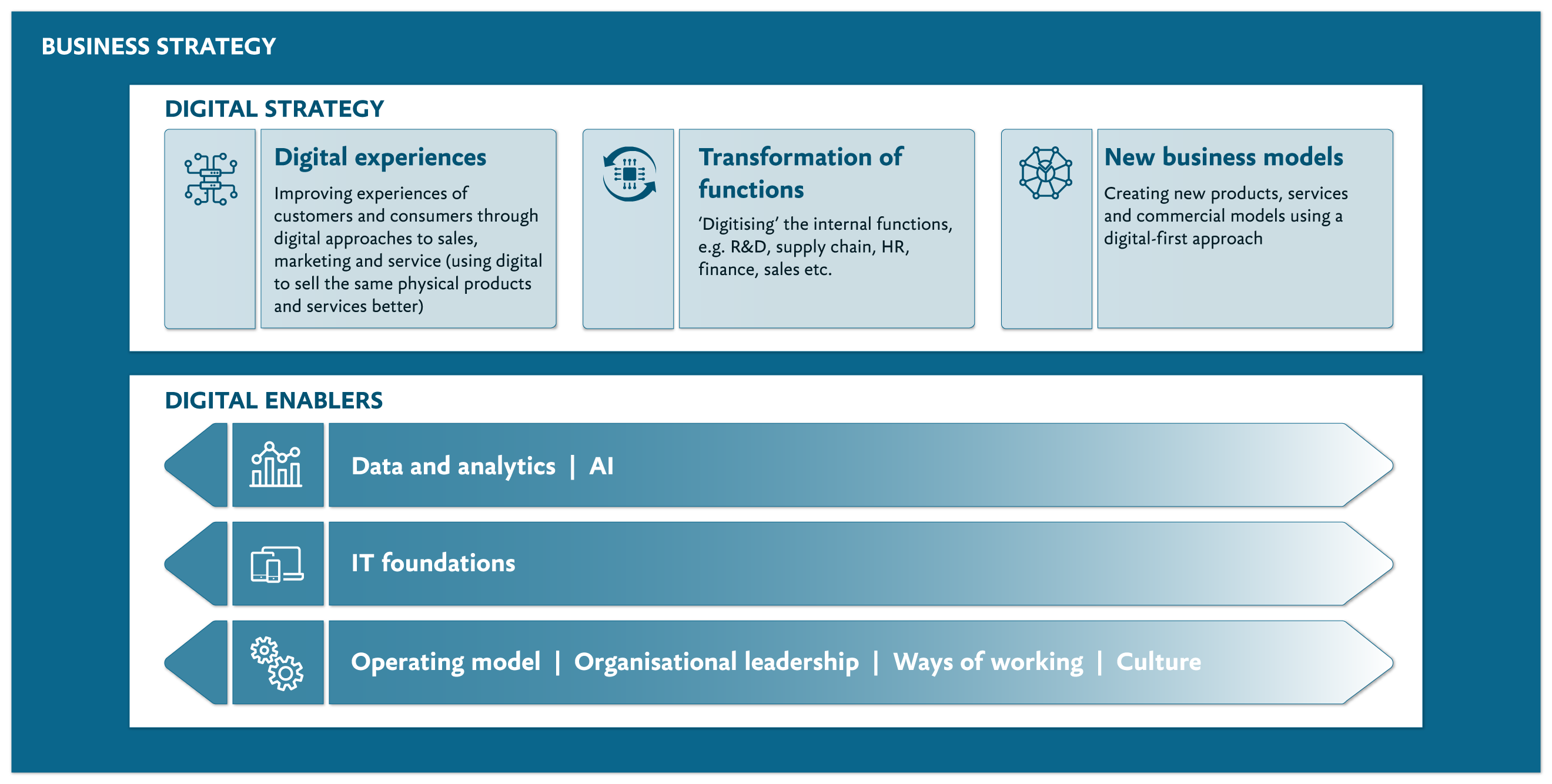 The Berkeley Partnership digital strategy framework
Specifically, we used the framework to guide the BSI working group in exploring three key areas:
- Digital customer experiences – using digital channels to better engage and serve stakeholders
- Transforming internal functions – streamlining operations and embedding digital tools
- Digital products and services – using digital to develop new external offerings.
This structure provided a clear lens through which to narrow down the possibilities, assess stakeholder impact and prioritise practical initiatives.
Throughout the process, we brought an ‘outside-in’ perspective from our digital strategy and transformation experience with other clients to complement and build on BSI’s view of their priorities.
Together, BSI and Berkeley co-developed a vision for the organisation’s digital future, which would see a fundamental change to the business. We identified a prioritised set of tangible digital ‘building blocks’ that could achieve BSI’s ambitions and address user needs, informed by comprehensive customer and employee analysis and interviews. These building blocks included new digital client engagement methods, digital-first products and services, and digital tools to empower colleagues to do their jobs more effectively.
We considered the people, process, technology and data capabilities BSI would need to practically deliver those building blocks. To help move from strategy to delivery, we also defined a digital transformation roadmap and a detailed mobilisation plan outlining the immediate next steps.
Given the wide range of possibilities that digital presents, Berkeley helped us focus on the most valuable opportunities for BSI and our customers. They brought real quality of thinking – both in shaping the strategy and in advising how to set ourselves up for success in delivery. Their contribution was instrumental in ensuring our strategy is both bold and grounded in practical execution.”
MARK THIRLWELL, GROUP STRATEGY & dIGITAL dIRECTOR, BRITISH STANDARDS INSTITUTE
Securing board-level buy-in for the digital strategy
Our engagement culminated in a presentation to the BSI board during its annual board strategy day. The entire day was dedicated to digital strategy, a testament to the importance BSI placed on this work, and resulted in the board endorsing the recommendations and priority areas.
In the lead-up, we engaged extensively with BSI’s executive leadership team, including regular working sessions with the Chief Executive Officer, Chief Financial Officer and Chief Strategy and Transformation Officer. This senior-level involvement ensured that the strategy received constructive challenge and refinement. It also secured ownership from the organisation’s top decision-makers, which is a critical driver for translating strategy into delivery success.
Client confidence: looking ahead to mobilisation and strategy delivery
The emphasis on action was extremely important to both BSI and Berkeley. Clients are often understandably anxious that strategy doesn’t remain purely theoretical and our approach always focuses on ultimately achieving real business results.
Our approach was successful enough that BSI subsequently adopted the prioritisation method used in the strategy to appraise other new investment opportunities.
Upon concluding our engagement, BSI leaders felt confident they had an ambitious, transformational digital strategy which the whole organisation supported. But critically, they knew exactly what they needed to do next to turn that vision into reality.


Digital transformation discovery workshop
Gain insights from Berkeley’s digital transformation specialists with a bespoke review of your digital ambitions. Wherever you are on your digital transformation journey, our consultants can help you consider your strategy, plans and priorities – and how these translate into impactful outcomes.

Digital transformation health check
Are you set up to deliver your digital transformation successfully? This quick diagnostic tool will help you assess where you're performing well and reveal the considerations you might have missed.