Digital transformation is as relevant as ever.
We’ve found that for many business leaders, digital transformation remains a top priority. However, not every organization is realising the full value of their investment.
In a business landscape where digital technologies are no longer novel but essential, the term ‘digital transformation’ has become ubiquitous but also increasingly ambiguous. This can put leaders in a position where they know that ‘digital’ is something their business needs to embrace but not necessarily what it means in practice, leading to strategies and programs that aren’t fit for purpose.
Many of our clients have had to navigate this complexity to turn ambition into a practical reality. Here, we share our approach to helping organizations define their digital transformation journey and assess digital opportunities strategically.
What does digital transformation mean?
Defining ‘digital’ depends very much on a business’ starting point. Single-sentence definitions, while often used, are rarely helpful. Each organization will need to determine what it means for them.
The contexts and use cases are so broad that ‘digital’ has a wide variety of possibilities but in our work with clients, we see several recurring themes.
- Data, analytics and AI - Gain access to vast data sets, the ability to conduct analytics and apply AI to make better and faster decisions and drive competitive advantage.
- Digital technology foundations - Establish the secure-by-design cloud-based capabilities that facilitate greater agility, delivery pace and innovation.
- Flexible enterprise architectures - Consider how digital platforms and applications integrate with data sets and technology foundations in a flexible, modular manner that limits technical debt.
- Customer and user centricity - Enable delivery of positive, personalized customer and employee experiences across all digital, physical and hybrid channels.
- Agile and experimental ways of working - Transform business processes and adopt new ways of working, underpinned by agile, product-centric and innovative working practices.
- Evolving skills and culture - Build new skills, adopt new behaviors and mindsets, and enhance leadership to successfully embrace ongoing technology-driven change.
Defining your digital strategy
Digital transformation is not a one-size-fits-all concept and it should be seen as a means to an end, not the end in itself. It’s about aligning digital capabilities with business goals, whether that’s improving customer experience, streamlining internal operations, or launching new products and services.
Resist the urge to jump straight into buzzword solutions, such as AI, blockchain, or cloud, without first understanding your business context. Organizations should begin by asking:
- What are the specific challenges or opportunities we face?
- Where are we currently underperforming or falling behind?
- How can digital help us address these challenges or exploit these opportunities?
It’s best to start with the broadest definition of what digital transformation could mean for your organisation. Then narrow down to what it should mean.
We’ve developed a digital framework to help organizations begin defining their digital strategy and identify the right digital priorities.
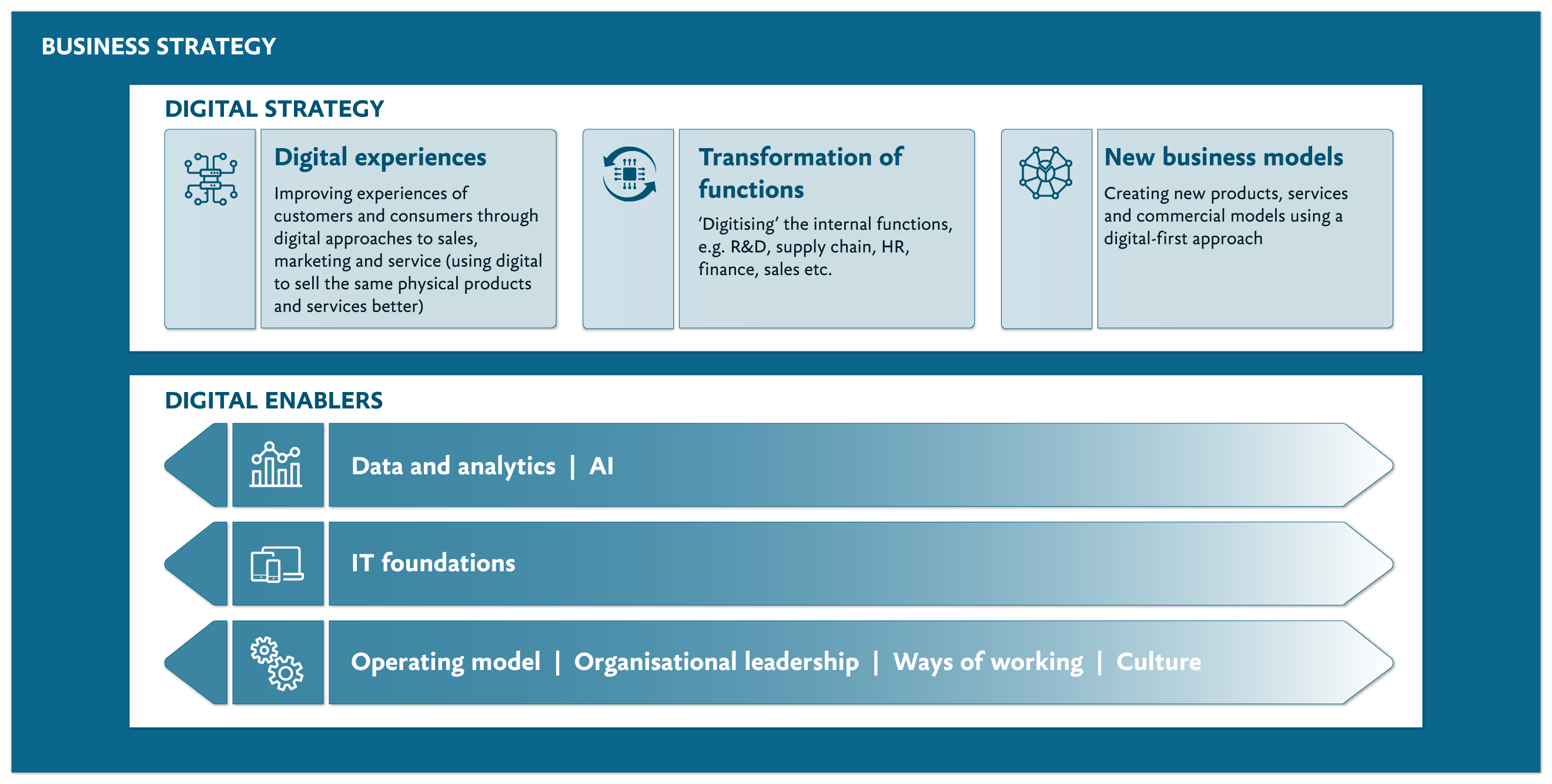
Every organization’s digital journey will be unique, but in our experience, digital transformation typically creates value in one or more of the following three areas:
A digital strategy focused on digital experiences, would define how to sell the same products and services but via digital or hybrid channels. Digital can enhance the experience of those who interact with your organization, including customers, clients, partners, or even employees. It’s about using digital channels to deliver more seamless, personalized, and engaging interactions.
Examples include:
- Creating omnichannel customer journeys
- Enhancing online brand presence
- Leveraging data for personalized engagement
- Reducing friction in the customer experience
- Building loyalty through digital engagement.
For many businesses, this can mean reimagining how traditional services are delivered in a digital-first world. As an illustration, we helped a multinational consumer products manufacturer create a new digital strategy to expand its product-centric approach towards providing better experiences for consumers. This included optimizing the ‘digital shelf’, ensuring brand presentation was consistent across all digital channels.
Here, the focus is on transforming internal operations. This could involve digitizing functional processes and ways of working, e.g. finance, HR, supply chain, or sustainability functions to improve efficiency, transparency, and agility.
Examples include:
- Automating repetitive tasks in finance or HR
- Using AI to optimize supply chain logistics
- Enhancing employee experience through digital tools
- Leveraging data for better decision-making.
This lens is particularly relevant for organizations looking to modernize legacy systems and ways of working. For example, we helped an NHS trust to define a digital strategy that focused on building the right digital and data foundations, including appropriate training for all staff.
This lens is about using digital to create entirely new revenue streams. It involves developing new digital products, services and customer value propositions. Such digital business models can be transformational beyond the original organization, with the most innovative disrupting traditional industries.
Examples include:
- Launching subscription-based services
- Creating digital marketplaces
- Offering freemium models or digital standards
- Monetising data or digital IP.
This is where digital becomes a driver of growth and innovation, not just efficiency. For example, we helped a global supply chain logistics supplier, to develop a new digital service to its customers, providing real-time tracking information and advanced data insights.
Digital enablers are critical to all digital transformations
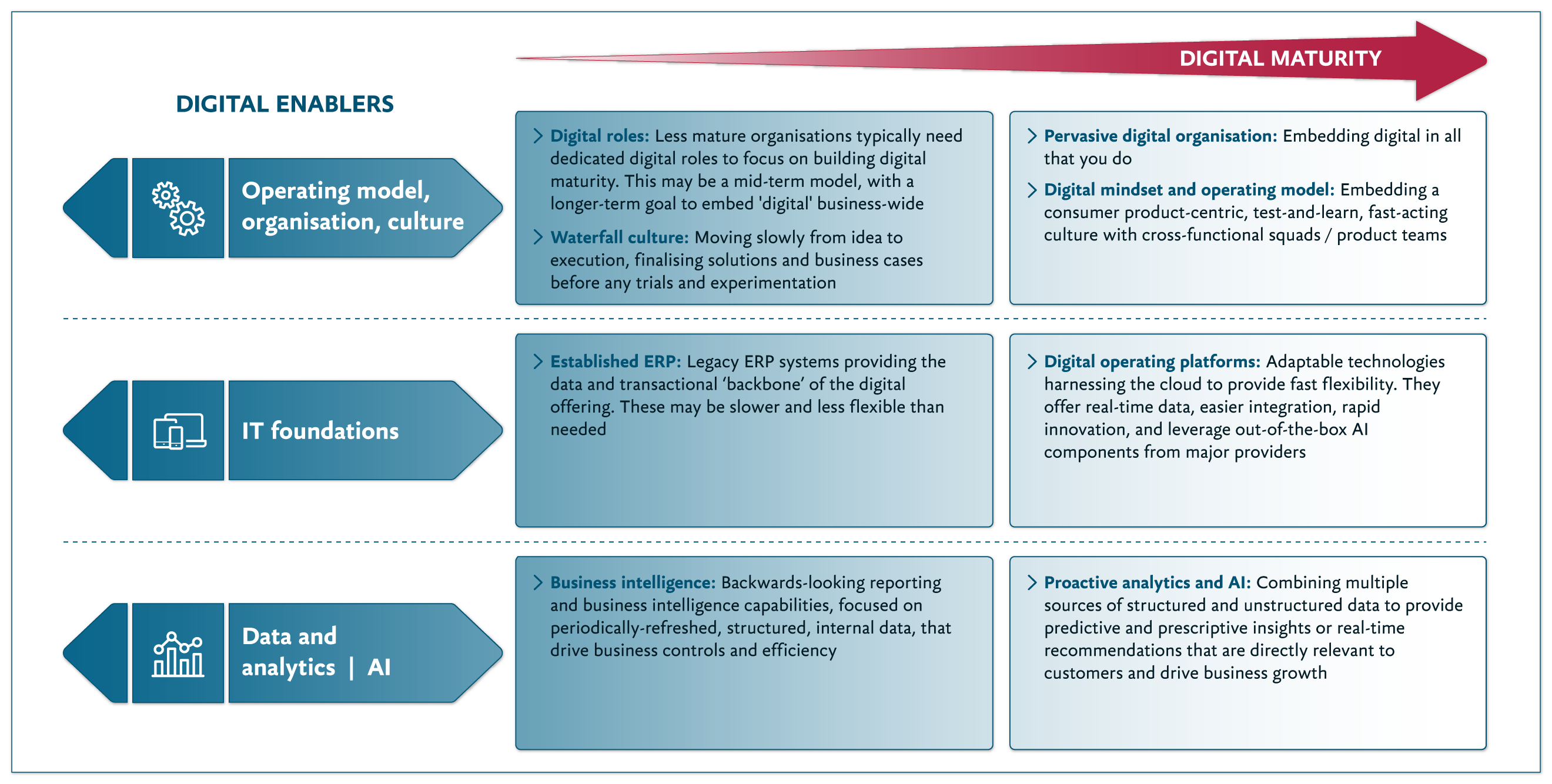
Across all three lenses, success depends on a set of critical enablers:
- Data and analytics - High-quality, accessible data is the foundation of any digital initiative, providing real-time predictive and prescriptive insights to drive business growth and margin.
- Technology foundations - Cloud infrastructure, enterprise architecture, and integration platforms provide the technical backbone for digital transformation.
- Operating model, organisation and culture - Agile ways of working, empowered teams, and strong leadership are essential to sustain transformation.
It’s also important to recognize that digital transformation is not just an IT initiative. It requires senior business sponsorship, cross-functional collaboration, and a clear understanding of how digital will impact people across the organization, including those in legacy roles.
Taking the right approach to digital transformation
Digital transformation is not about chasing the latest trend or technology. It’s about making deliberate, strategic choices that align with your organization’s business goals and context. By exploring what digital could mean for you, viewing opportunities through the right strategic lenses, and grounding your efforts in practical enablers, you can chart a path that’s both ambitious and achievable.


Related services

The author


Digital transformation discovery workshop
Gain insights from Berkeley’s digital transformation specialists with a bespoke review of your digital ambitions. Wherever you are on your digital transformation journey, our consultants can help you consider your strategy, plans and priorities – and how these translate into impactful outcomes.

Digital transformation health check
Are you set up to deliver your digital transformation successfully? This quick diagnostic tool will help you assess where you're performing well and reveal the considerations you might have missed.